The room fell quiet the moment the Guru Granth Sahib was uncovered. Four hundred years of scripture and devotion settled into a single hush. On either side stood two families who had crossed oceans and years of hard-won distance to reach this morning. For a South Asian wedding photographer, an Anand Karaj is a ceremony to witness quietly.
This was the second day of a three-day Southern California wedding, held at San Diego Sikh Society in Escondido. For one of the two families, it was the day that mattered most. Above all, the couple had planned the weekend as a tribute to the families who made their lives possible.
A Sikh Wedding Morning at San Diego Sikh Society
The morning began with portraits before the ceremony. First came the details: red bangles resting against an embroidered red lehenga, the skirt spread out in black and white.
Next came the Baraat, the wedding procession that brings one family to the door of the other. The second family met them at the gate for the Milni. This ritual greeting unfolds one relative at a time, uncle to uncle, brother to brother. Each exchange is a small, formal acknowledgment that two families are about to become one.
Guests filled the hall in a quiet color code of their own: dark blue for one family, light blue for the other. Most visitors wouldn’t notice it. Everyone inside the room did.
Then guests took their seats on the floor of the prayer hall, facing the Guru Granth Sahib beneath its gold canopy. The couple sat before it together. After that, the ceremony began.
What Happens During an Anand Karaj
Anand Karaj translates as blissful union, and it is the Sikh wedding ceremony. Most often, it takes place in the morning at a gurdwara, the Sikh place of worship. The Guru Granth Sahib, the Sikh scripture, is present throughout.
At its heart are four hymns called the Lavan. With each hymn, the couple rises and circles the Guru Granth Sahib together, completing one circuit per hymn. Each circuit marks a different stage of the life they are committing to: duty, devotion, detachment from ego, and finally, union.
It is not a ceremony meant for spectacle. It asks for stillness, patience, and attention, from the couple and from everyone in the room. That included a family that had left Punjab and built a new life here. Through years of steady, difficult work, they had waited a long time for a morning exactly like this one.
What stays in the photographs is that stillness: an ivory turban, a gold necklace seen in profile, a hall of guests looking on during the hymns.
At last, the fourth Lavan ended, and the stillness broke all at once. Applause came first, then movement, then the particular joy of a room that has held something sacred and finally gets to celebrate it out loud.
Portraits That Honor the Details
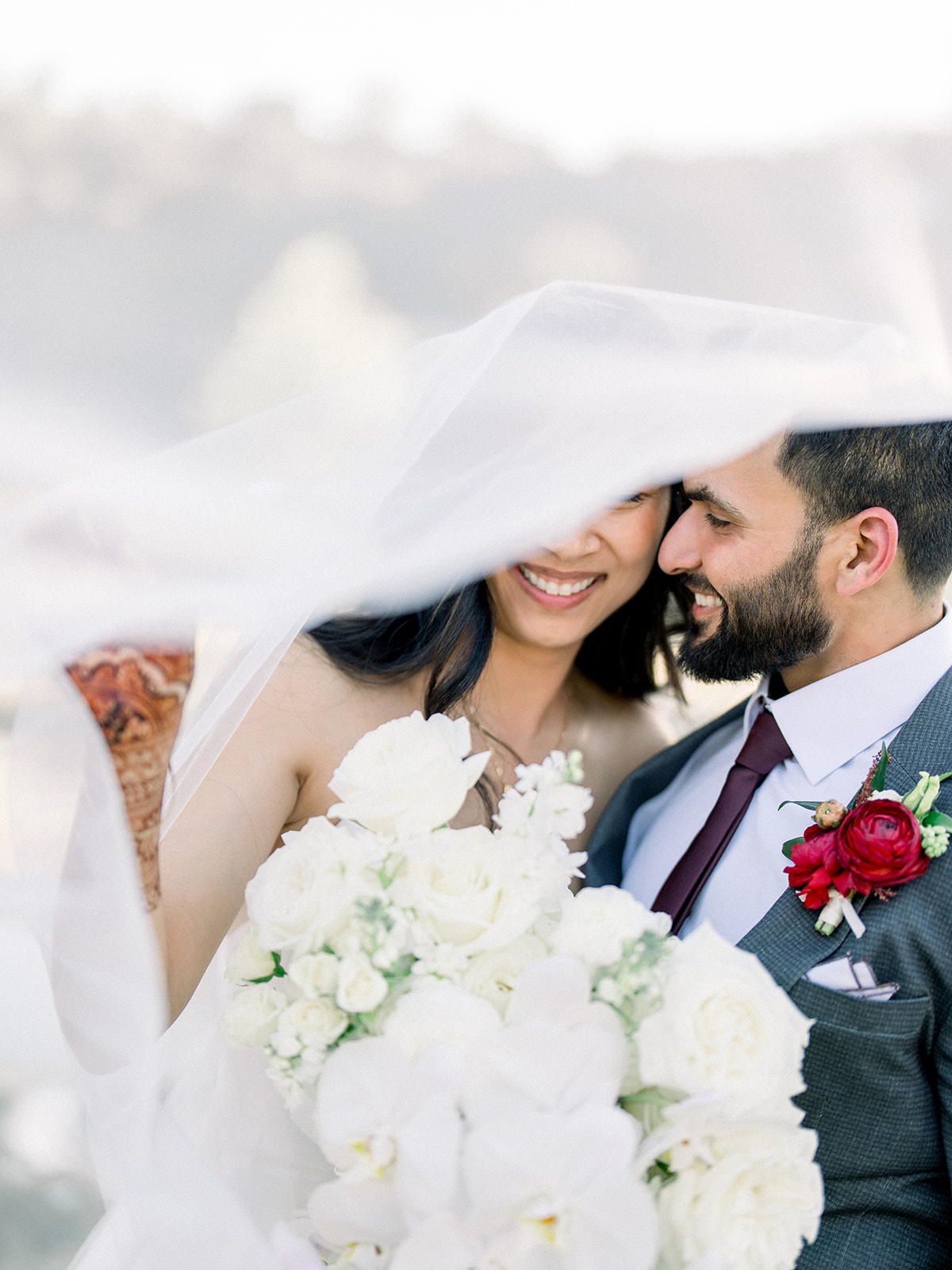
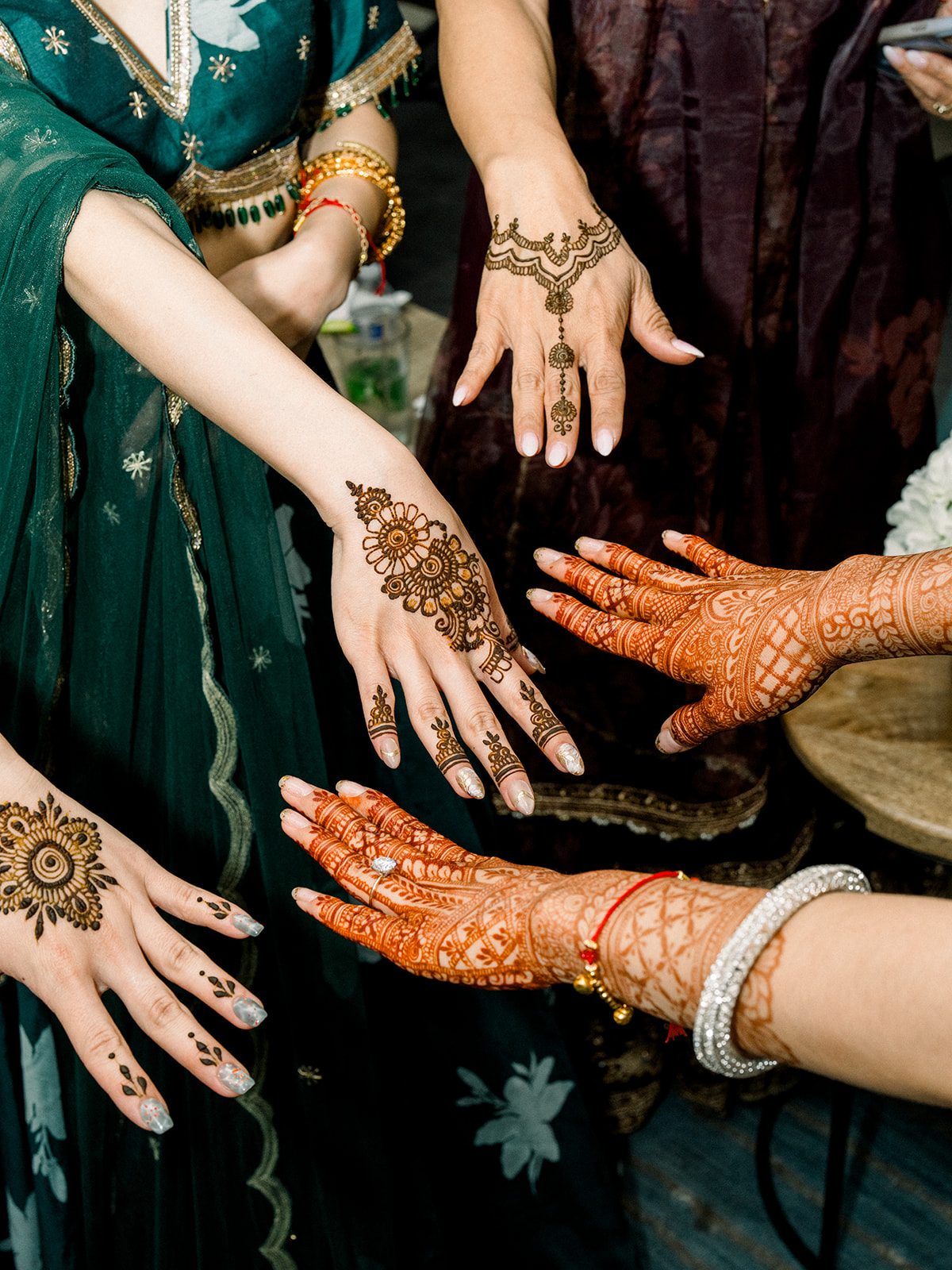
Portraits of the couple in their wedding attire belong to the same morning. A red and gold embroidered lehenga, mehndi, red bangles, and layered jewelry each deserve a close frame. An ivory sherwani, a turban, and a gold sword deserve the same attention. Set against ivy, stone, and open lawn, the red and ivory read as a pair.
Photographing a Sikh Wedding: What to Know
Couples planning an Anand Karaj often ask how photography will work inside a gurdwara. When you hire a South Asian wedding photographer, a few points are worth settling early.
Ask the gurdwara about its guidelines
Everyone inside a gurdwara covers their head and removes their shoes, including the photography team. In addition, each gurdwara sets its own photography guidelines. These cover where photographers may stand and how they may move during the Lavan. Confirm them well before the wedding day.
Build the morning around the ceremony
An Anand Karaj usually runs on a morning schedule. For that reason, portraits work best before the Baraat and Milni, with time left for breakfast and seating. Plan family portraits and Shagun photographs for right after the ceremony, while everyone is still together. In this wedding, the ceremony was scheduled for about forty-five minutes, with family photographs and lunch right after.
Send the family list early
Both families will want formal portraits. A written list of the groupings you want lets the photographer move quickly. As a result, relatives spend less time waiting and more time celebrating.
Choose a South Asian wedding photographer who works quietly
Look for a photographer who has worked inside a gurdwara before. The ceremony cannot be repeated or redirected, so that experience matters. Above all, choose someone who can move without drawing attention.
Part of a Three-Day Wedding
The Anand Karaj was one morning of a much longer weekend. It began with a Tea Ceremony, Maiyan, and Sangeet at The Film Hub in Vista and closed with a civil ceremony and reception at Monserate Winery in Fallbrook. Still, this ceremony was the morning everything else had been building toward. It was quiet where the rest of the weekend was loud, and devotional where the rest was celebratory.
Planning a Sikh or South Asian wedding of your own? Tiffany Longeway Photography photographs weddings across Northern and Southern California and at destinations beyond. Inquire about your wedding to start the conversation.
For something quieter along the coast, see this intimate Santa Barbara Botanic Garden wedding, which moved from the garden to Leadbetter Beach.
VENDORS | Venue San Diego Sikh Society | Planning & Design LeeLa Events | Photography Tiffany Longeway Photography |